What's Really Hiding in Your Supplements: A Plain-English Guide to Those Scary-Looking Inactive Ingredients
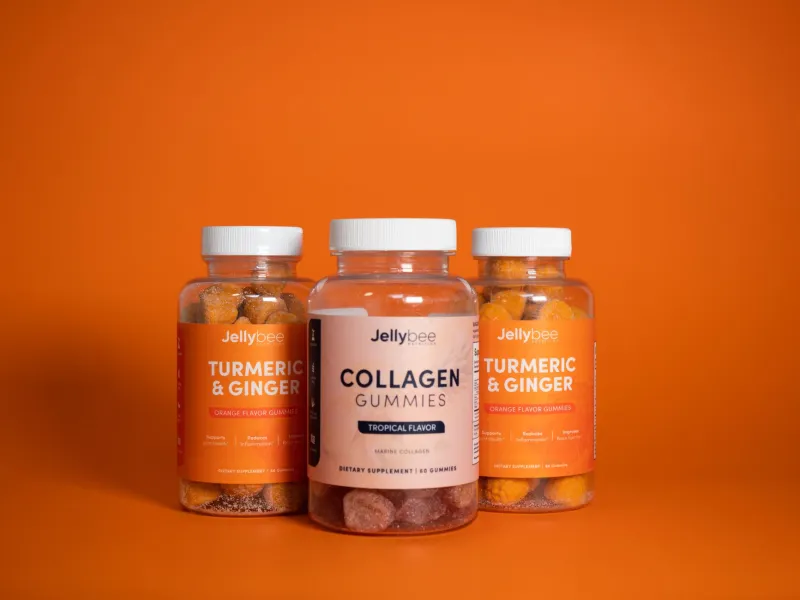
You did your homework. You compared brands, checked the dosage, maybe even Googled the active compound. You felt good about your purchase. Then you flipped the bottle over and saw the "Other Ingredients" section — a wall of chemical-sounding names that made your eyes glaze over.
Magnesium stearate. Microcrystalline cellulose. Hydroxypropyl methylcellulose. Silicon dioxide. Titanium dioxide.
What is all of that? And more importantly — should you be worried?
The honest answer is: sometimes yes, sometimes no, and almost always it depends. Let's break it down.
Why Supplements Have Ingredients Beyond the Active Stuff
Here's the thing manufacturers don't exactly advertise: making a supplement capsule or tablet is more of an engineering challenge than most people realize. Pure active compounds are often powdery, sticky, moisture-sensitive, or just plain impossible to compress into a tidy pill without a little help.
That's where excipients come in. Excipients is the industry term for all those non-active ingredients — the fillers, binders, coatings, flow agents, and preservatives that make your supplement look like a supplement instead of a loose pile of dust.
Some of these are completely benign. Others exist primarily to cut manufacturing costs. And a small handful have raised enough red flags that health-conscious consumers are right to ask questions.
The Most Common Offenders (And What They Actually Are)
Magnesium Stearate
This is probably the most debated excipient in the supplement world. Magnesium stearate is a flow agent — it keeps powders from clumping and sticking to machinery during manufacturing. It's derived from stearic acid, a saturated fat found naturally in foods like beef, cocoa butter, and chicken.
The concern you'll see floating around wellness forums is that it supposedly suppresses immune function or forms a "biofilm" in your gut that blocks nutrient absorption. The science behind those claims is pretty thin. The amounts used in supplements are tiny — we're talking milligrams — and most researchers consider it safe at those levels.
That said, some people with sensitive digestive systems do report issues, and if you're taking a dozen supplements daily, the cumulative load of excipients adds up. If you want to avoid it, look for labels that specifically say "no magnesium stearate" — plenty of brands have moved away from it.
Titanium Dioxide
This one's worth paying attention to. Titanium dioxide is a white pigment used to give tablets and capsules a bright, clean appearance. Cosmetically, it makes supplements look more polished. Functionally, it does nothing for your health.
The European Food Safety Authority actually flagged titanium dioxide as potentially unsafe for food use back in 2021, citing concerns about genotoxicity — meaning it could potentially damage DNA — particularly in nanoparticle form. The EU has since moved to restrict it in food products.
The FDA still considers it generally recognized as safe (GRAS) in the US, but the regulatory gap between the US and Europe on this one is notable. If you'd rather not be a test case, scanning labels for titanium dioxide and choosing brands that skip it is a reasonable move.
Microcrystalline Cellulose (MCC)
Despite sounding like something from a lab, microcrystalline cellulose is basically purified wood pulp. It's used as a filler and binder — it adds bulk to small-dose actives so the pill is a manageable size, and it helps tablets hold their shape.
For most people, MCC is a non-issue. It's not absorbed by the body and passes through your digestive system largely intact. It's also used in food products you probably eat regularly. Unless you have a specific sensitivity, this one isn't worth losing sleep over.
Silicon Dioxide
Another flow agent, silicon dioxide (also called silica) prevents clumping in powdered supplements. It's the same compound found in sand and quartz, which sounds alarming until you realize it also occurs naturally in foods like oats, barley, and leafy greens.
In the small quantities used in supplements, it's generally considered safe. The concerns that do exist relate to inhaled silica in occupational settings — not the trace amounts you're getting in a capsule.
Artificial Colors and Dyes
Here's where things get more interesting. Some supplement brands use synthetic dyes — FD&C Red 40, Blue 2, Yellow 5 — to make their products look more appealing. These serve zero nutritional purpose and exist purely for marketing aesthetics.
The research on artificial dyes is mixed, but there's enough concern about behavioral effects in children and potential hypersensitivity reactions that many health-focused consumers choose to avoid them. If your multivitamin is bright purple for no apparent reason, that color came from somewhere.
Carrageenan
Derived from red seaweed, carrageenan is used as a thickener and stabilizer, particularly in liquid supplements and softgels. It's been the subject of ongoing debate in nutrition circles, with some animal studies suggesting it may promote gut inflammation.
Human evidence is less clear-cut, and regulatory bodies including the FDA still permit its use. But if gut health is a priority for you — or you're managing an inflammatory condition — it's one to note.
How to Actually Read the Label
Knowing which ingredients to watch for is only half the battle. Here's a practical approach to decoding that fine print:
Go straight to "Other Ingredients." This section is where all the excipients live. It's usually smaller text near the bottom of the supplement facts panel.
Run the names through a quick search. You don't need a chemistry degree. A 30-second Google search on any unfamiliar ingredient will usually tell you what it is, what it does, and whether there are any notable concerns.
Consider your total supplement load. One capsule with magnesium stearate isn't a big deal. Eight supplements daily, all containing the same excipients, is a different calculation.
Look for "clean label" brands. A growing number of supplement companies have made minimal excipients a selling point. Phrases like "no artificial colors," "no fillers," or "excipient-free" on the label indicate a brand that's at least thinking about this.
Don't let perfect be the enemy of good. Some excipients are genuinely necessary for product stability and shelf life. A supplement with a couple of benign binders isn't automatically inferior to one with none.
The Bigger Picture
Supplements aren't regulated with the same rigor as prescription drugs in the US, which means manufacturers have considerable latitude in what they include — and how prominently they disclose it. The active ingredients get the front-of-label spotlight. The excipients get the fine print.
That imbalance is worth pushing back against. As a consumer, you have every right to know exactly what you're putting in your body — not just the headline compound, but everything else riding along with it.
The goal isn't to become paranoid about every ingredient with more than three syllables. It's to be the kind of informed shopper who reads past the marketing claims and actually understands what they're buying. Your health is worth that extra two minutes of label reading.